

In the world of professional hospitality, chaos is not an exception—it is a daily reality. Every kitchen, regardless of size or reputation, experiences moments when everything seems to move faster than control can keep up. Orders flood in, tickets pile up, communication tightens, and stress levels rise across the team.

Yet, in some kitchens, this chaos remains controlled. In others, it escalates into breakdown. The difference does not lie in luck or talent alone. It lies in structure.
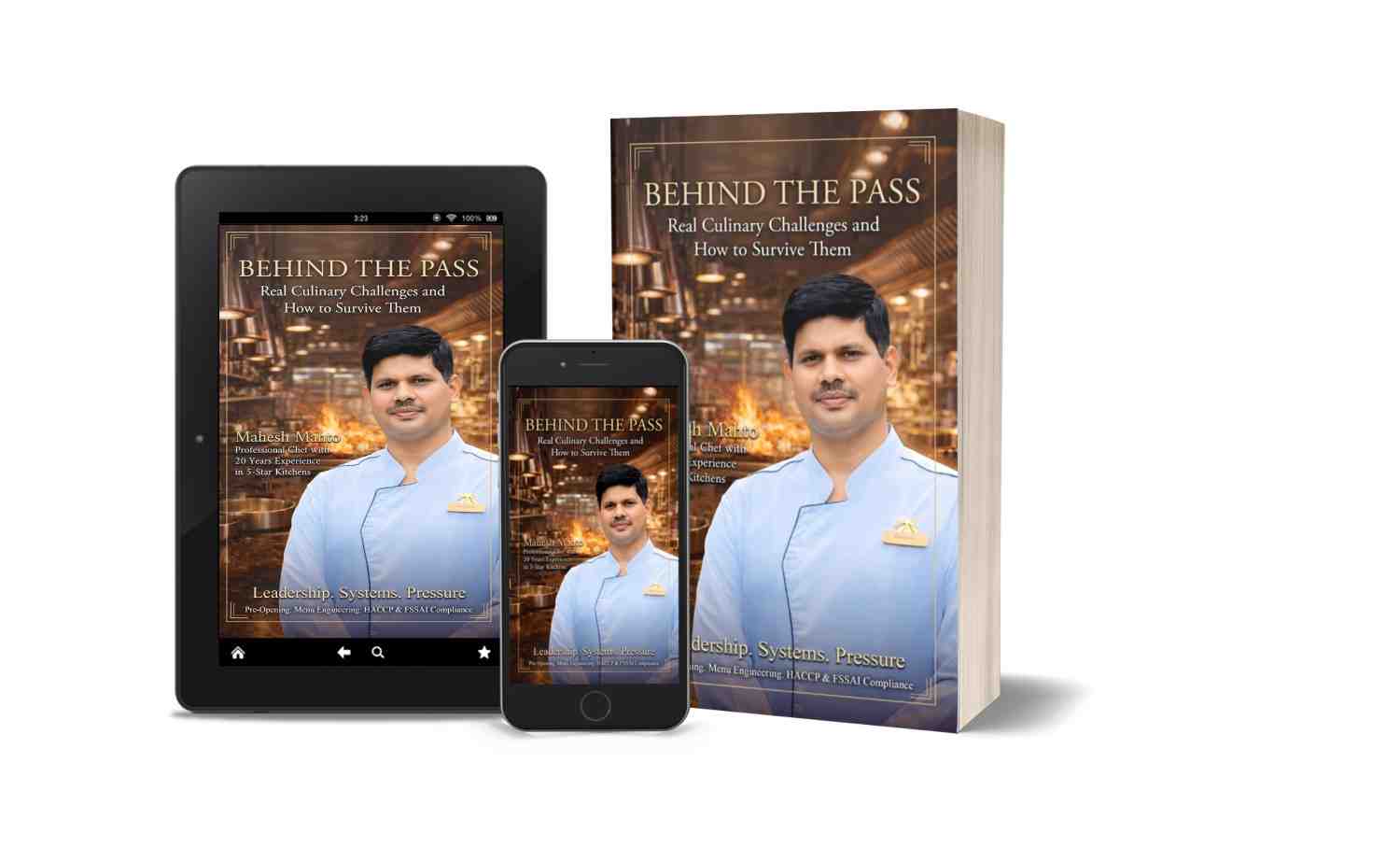
Chef Mahesh Mahto, an experienced Executive Chef specializing in operational systems, describes this transformation as the journey from chaos to control. According to him, kitchens do not eliminate chaos—they learn how to absorb it without breaking.
Understanding Chaos in Kitchen Environments
Chaos in kitchens is often misunderstood. It is not simply noise, speed, or pressure. It is the point where demand exceeds unstructured capacity. When systems are weak, even small increases in order volume create instability.
Common signs of chaos include:
- Delayed order execution
- Miscommunication between stations
- Repeated corrections in dishes
- Overloaded key staff
- Unclear task prioritization
Individually, these issues seem manageable. But together, they create operational imbalance.
The Illusion of Control During Preparation
Many kitchens feel fully prepared before service begins. Stations are arranged, ingredients are prepped, and staff are positioned. This creates an illusion of control.
However, preparation is only one phase of operation. Real control is tested during execution. Without structured systems, even well-prepared kitchens begin to lose rhythm once pressure increases.
Chef Mahto emphasizes that preparation without structure is incomplete readiness.
The Role of Structured Systems
Structured kitchens are not immune to chaos—but they are resistant to collapse. This resistance comes from systems designed to absorb pressure.
These systems include:
- Defined station responsibilities
- Pre-set cooking sequences
- Time-based preparation flow
- Standardized communication methods
- Clear escalation protocols
When these systems are in place, chaos does not disappear—it becomes manageable.
Predictability as a Stabilizing Force
One of the most powerful outcomes of structured kitchens is predictability. When staff know exactly what is expected, uncertainty decreases. This reduces hesitation and improves speed.
Predictability does not slow kitchens down—it stabilizes them under pressure.
The Domino Effect of Poor Structure
In unstructured kitchens, small issues escalate quickly. A delayed prep item can affect plating, which affects service timing, which then affects table turnover.
This domino effect is what turns minor inefficiencies into full operational breakdowns.
Structured systems interrupt this chain by isolating problems before they spread.
Leadership in Controlled Chaos
Leadership plays a critical role in maintaining control during high-pressure service. Effective leaders do not attempt to fix every issue manually. Instead, they rely on systems to guide resolution.
Their focus is on:
- Maintaining clarity
- Preventing panic
- Ensuring communication discipline
- Stabilizing workflow
Calm leadership reduces emotional escalation across the team.
The Importance of Workflow Design
Workflow design determines how smoothly a kitchen operates under pressure. Poor design creates bottlenecks. Strong design ensures continuous movement.
Key elements of effective workflow include:
- Logical station arrangement
- Efficient movement paths
- Balanced workload distribution
- Clear task sequencing
When workflow is optimized, chaos reduces significantly.
Emotional Control as Operational Discipline
Chaos is not only physical—it is emotional. Stress spreads quickly in kitchens, affecting focus and coordination.
Structured systems help reduce emotional pressure by removing unnecessary decision-making. When staff follow clear processes, they feel more in control even during busy periods.
Conclusion
Chaos is inevitable in kitchen environments, but breakdown is not. Chef Mahesh Mahto’s approach highlights that control is not achieved by eliminating pressure, but by designing systems strong enough to handle it.
A kitchen that moves from chaos to control is not the one that works harder—it is the one that works with structure.
Media Coverage & External Links
Read the full feature:
Interview:
Also featured in The Literature Times:
Get Your Copy
The pass is open.
- Amazon — https://lnkd.in/gh__9vkJ
- Flipkart — https://lnkd.in/gVcFjHTa
- Astitva Store — https://lnkd.in/gpmc_vpp
- Classic Shelf — https://lnkd.in/g7_k4TpW