
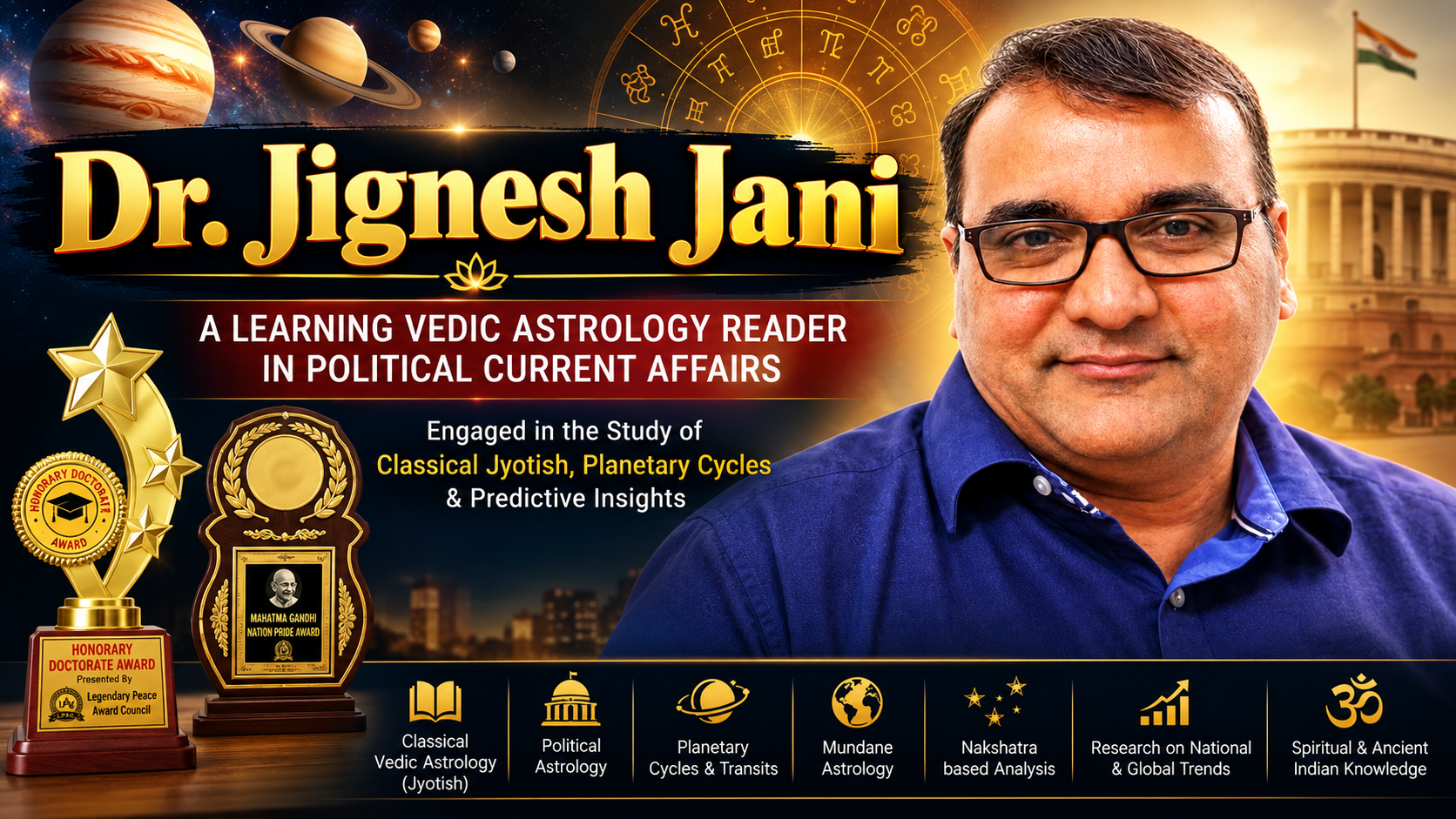

Ahmedabad, July 10: Vedic astrology researcher Dr. Jignesh Jani has shared his observations on the symbolic significance of the current Mars–Rahu and Saturn–Neptune planetary alignments, stating that many practitioners of traditional Vedic astrology interpret these celestial configurations as representing a period of global transformation, strategic realignment, and economic uncertainty. He emphasized that these interpretations are symbolic and should not be regarded as scientifically established forecasts of geopolitical events.
According to Dr. Jani, the ongoing Mars–Rahu conjunction, known in Vedic astrology as Angarak Yoga, has traditionally been associated with assertive energy, decisive action, military preparedness, strategic competition, and heightened international activity. He explained that throughout history, astrologers have viewed this combination as symbolizing periods that require caution, balanced leadership, and careful diplomatic engagement.
Dr. Jani also discussed the Saturn–Neptune alignment, which many astrological traditions interpret as representing institutional transformation, ideological shifts, evolving governance models, and changing global power structures. He noted that these symbolic interpretations encourage reflection on how nations respond to emerging political, economic, and social challenges.
While addressing current international developments, Dr. Jani pointed out that global affairs are shaped by diplomacy, economic policies, technological innovation, security considerations, and cooperation between countries. He reiterated that astrology provides symbolic insights into collective cycles rather than evidence-based predictions of wars, conflicts, or political decisions.
Highlighting the importance of Jupiter, Dr. Jani explained that the planet is traditionally associated with wisdom, justice, ethics, education, and diplomacy in Vedic astrology. Many practitioners believe Jupiter symbolizes opportunities for peaceful negotiations, responsible governance, and constructive international dialogue, particularly during periods of uncertainty.
“Planetary alignments can be interpreted as symbolic reflections of broader global trends, but they do not determine the future,” Dr. Jignesh Jani said. “The course of international affairs depends on the decisions of governments, policymakers, and world leaders who choose diplomacy, cooperation, and peaceful engagement.”
Dr. Jani concluded by encouraging responsible public understanding of astrology and urging readers to distinguish symbolic astrological perspectives from evidence-based geopolitical analysis. He expressed hope that continued international dialogue, mutual respect, and collaborative leadership will help build a more peaceful, stable, and prosperous future for the global community.