
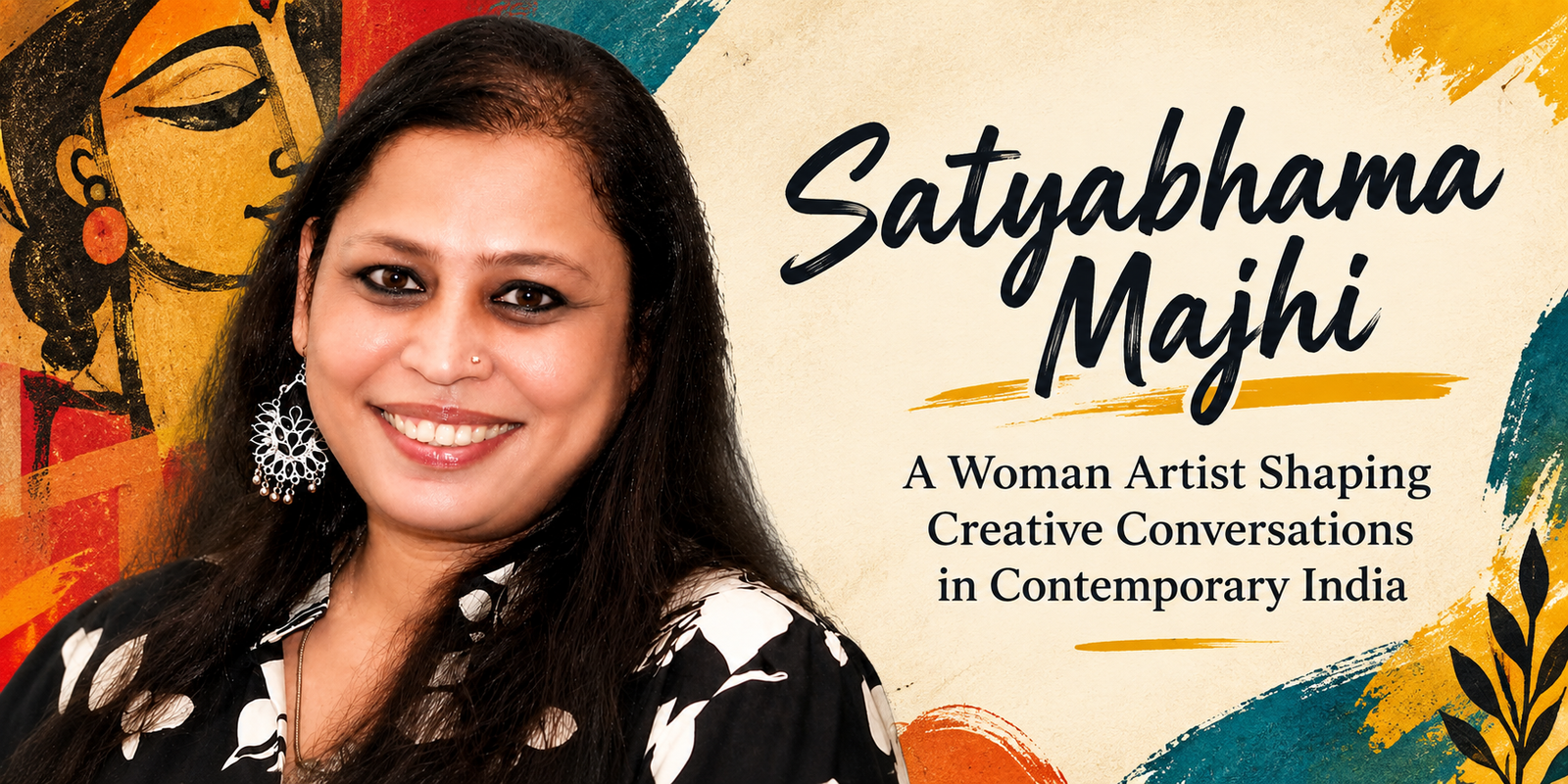

An artist’s development is shaped not only inside the studio but also through encounters with new places, people, ideas, and artistic communities. For contemporary Indian artist Satyabhama Majhi, residencies, artist camps, exhibitions, workshops, and collaborative projects have provided opportunities to experience art beyond familiar surroundings.
Based in Bhubaneswar, Odisha, Majhi has developed a multidisciplinary practice spanning painting, sculpture, installation, photography, mixed media, public art, community-based practice, and cultural engagement. Her participation in artistic platforms across India and in international contexts has contributed to an evolving practice that connects regional experience with wider conversations in contemporary art.
Rather than viewing artistic exchange simply as professional exposure, Majhi’s journey demonstrates how encounters with different environments can influence an artist’s thinking, observation, and creative process.
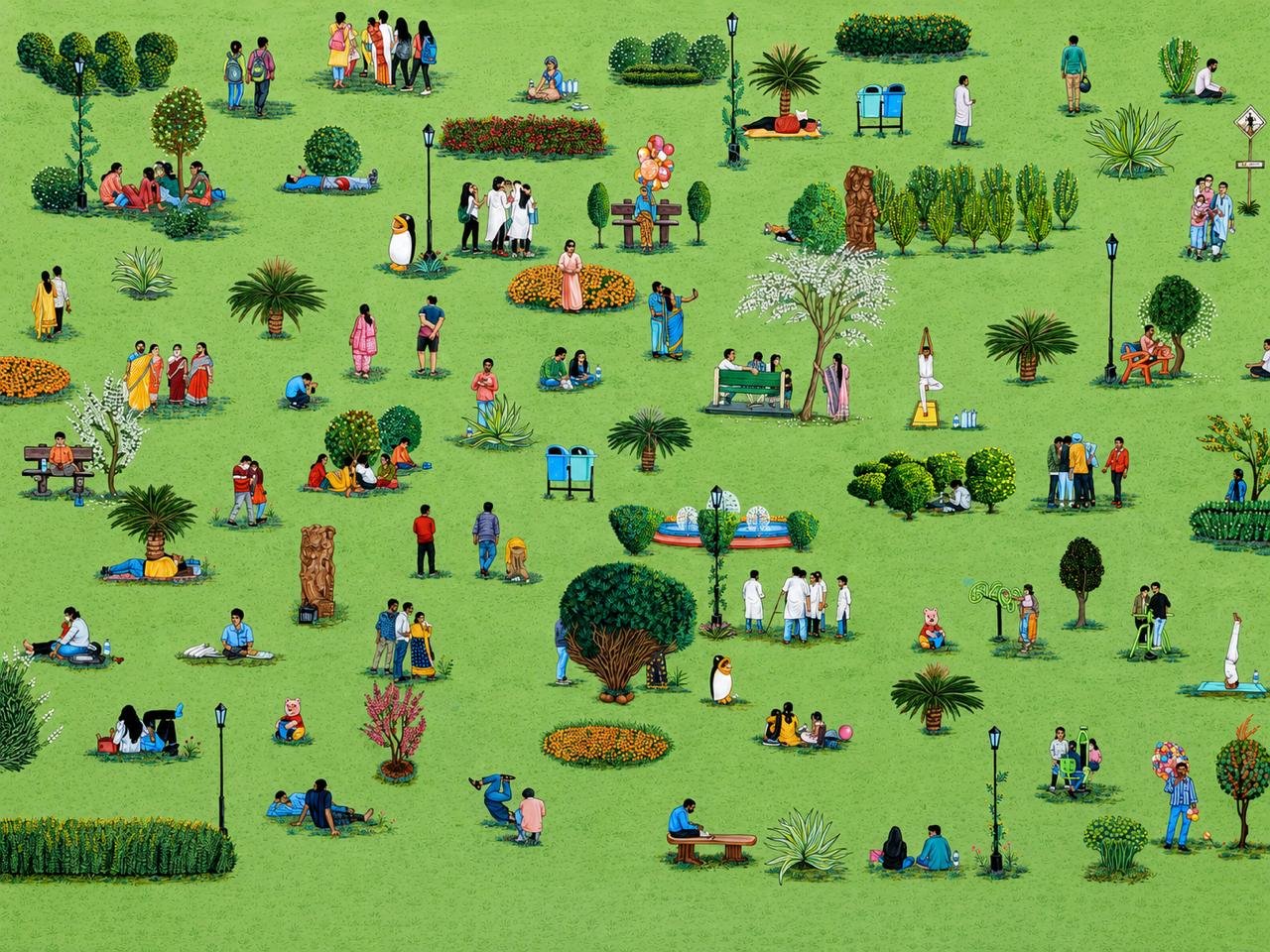
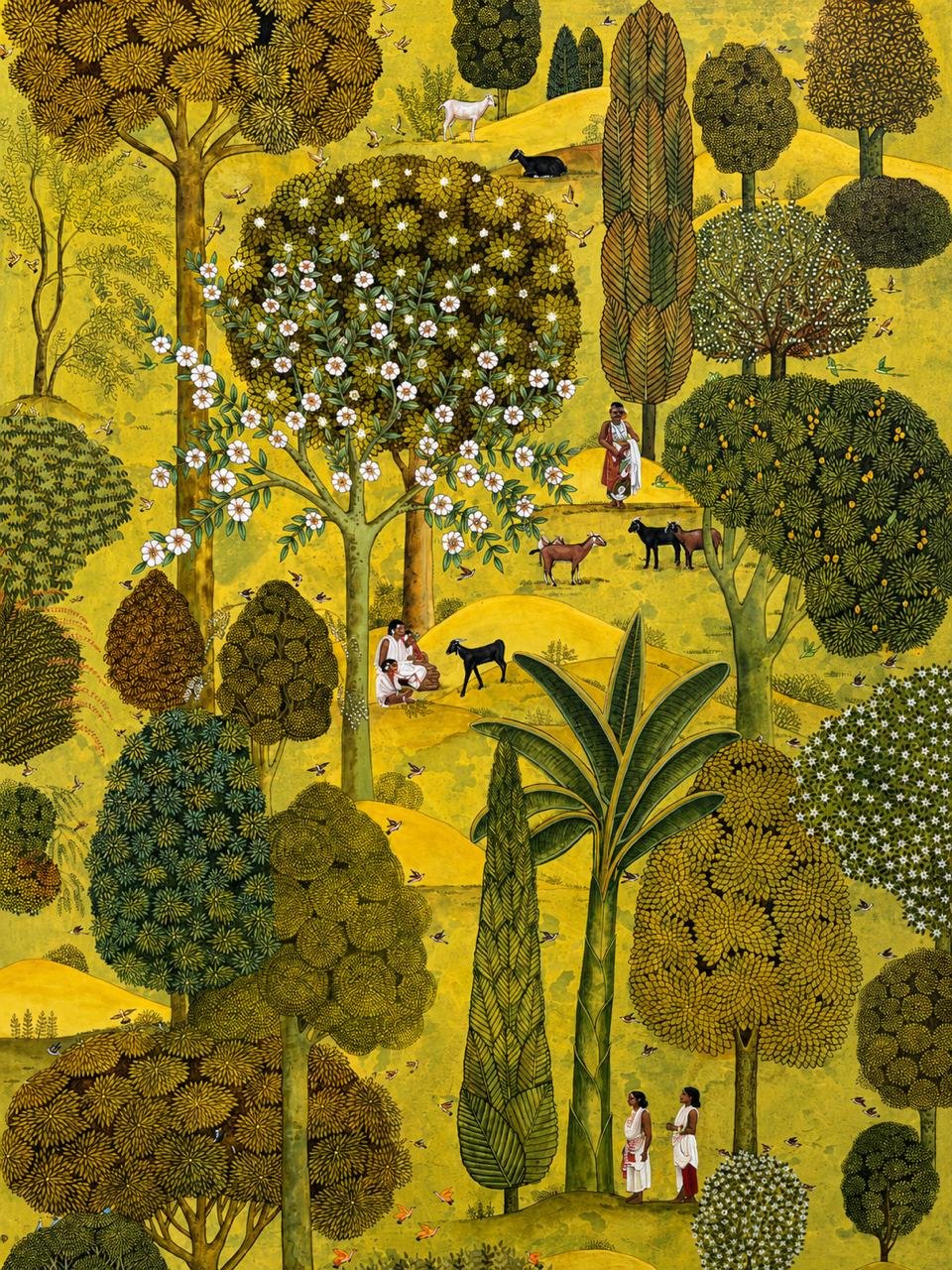
Moving Beyond the Studio
The traditional image of an artist often centres on the studio—a private space where ideas are developed and artworks are produced.
For Majhi, however, artistic practice has repeatedly extended beyond this setting.
Residencies and artist camps can place artists in unfamiliar environments where observation becomes an important part of the creative process. New landscapes, communities, architectural spaces, cultural practices, and conversations can become sources of reflection.
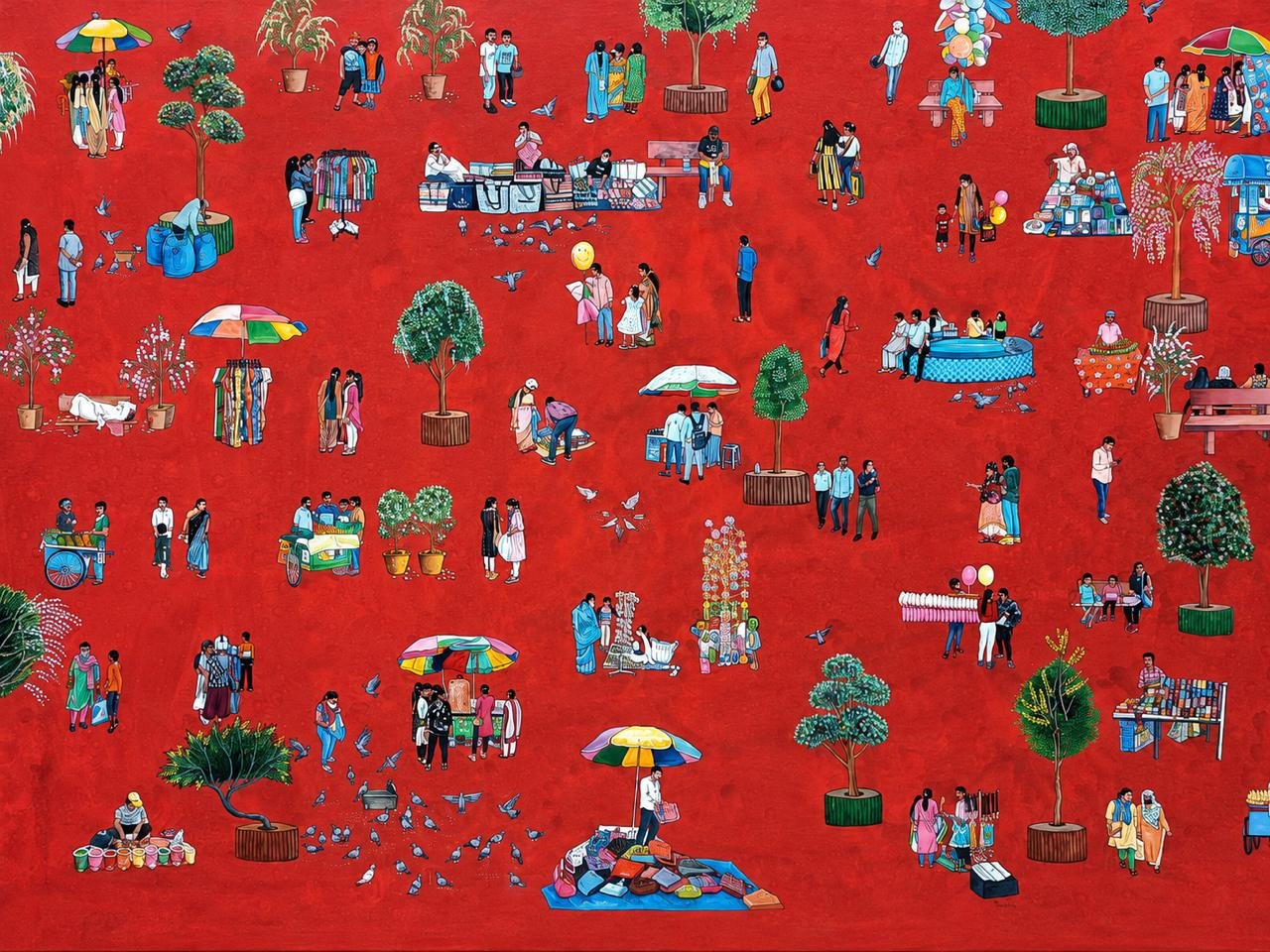
This approach complements Majhi’s existing interest in people and places.
Her work often begins with observation, and artistic exchanges provide new environments in which that observation can take place.
The Value of Artistic Residencies
Residencies can give artists time and space to experiment without the immediate pressures of producing work for a conventional exhibition.
For an artist working across several media, this freedom can be particularly valuable.
Majhi’s participation in programmes such as the Gram International Residency and Gram Art Residency reflects her engagement with environments where artistic practice intersects with community, rural life, and cultural exchange.
Such settings can challenge an artist to reconsider familiar ideas through unfamiliar surroundings.
The result does not necessarily have to be a completely new artistic identity. Instead, it can deepen an existing vocabulary.
Learning Through Place
Place has remained an important component of Majhi’s artistic thinking.
Her experience in Odisha has provided a strong foundation, from the urban environment of Bhubaneswar to rural landscapes and the cultural context of Niyamgiri.
Residencies can expand this understanding by introducing different geographical and social contexts.
An artist may begin to notice differences in architecture, local materials, patterns of daily life, environmental conditions, or community traditions.
These observations can influence artistic thinking even when they do not appear directly as identifiable subjects in a finished work.
Community as a Site of Exchange
Some of Majhi’s artistic experiences have involved communities rather than conventional gallery audiences.
This is significant because community-based practice changes the relationship between artist and subject.
Instead of simply observing people from outside, the artist has opportunities to listen, interact, and understand existing practices.
Majhi’s long-term engagement with the Dongaria Kondh community illustrates this approach.
Her engagement has involved observing cultural practices, livelihood patterns, indigenous visual traditions, and relationships with the natural environment.
Such experiences demonstrate how sustained interaction can influence artistic understanding more deeply than a brief encounter.
The Gram Art Connection
Projects associated with Gram Art and rural artistic environments have offered another dimension to Majhi’s practice.
Rural communities can provide a different context for understanding creativity, labour, agriculture, local traditions, and everyday life.
For an artist interested in the relationship between people and environments, these settings can become important spaces of learning.
Art in such contexts does not necessarily have to remain confined to conventional exhibition structures.
It can develop through participation, conversation, observation, and collaboration.
International Artistic Exchange
Majhi’s participation in projects connected with the Vancouver Biennale, including the I HAVE A DREAM project, demonstrates the wider reach of her artistic engagement.
International platforms can create opportunities for artists to encounter different approaches to public art, community participation, and cultural expression.
For an Indian artist whose work is deeply connected with local experiences, international exchange can also create an interesting dialogue between the local and the global.
Regional cultural knowledge does not have to disappear when an artist enters an international context.
Instead, it can become part of a larger conversation.
Bringing Regional Experience to Wider Platforms
Majhi’s work demonstrates that an artist can remain connected with Odisha while participating in national and international artistic networks.
Her artistic identity has been shaped by the cultural and environmental context of the region, but her exhibitions, residencies, workshops, and collaborative projects have created opportunities to present those perspectives to wider audiences.
This movement between local and wider platforms is particularly relevant to contemporary Indian art.
India contains numerous regional artistic traditions and cultural histories, and contemporary artists can play an important role in bringing these experiences into broader artistic discussions.
Exchanges With Other Artists
Artist camps and collaborative programmes also create opportunities for interaction between practitioners.
Artists working in different media or coming from different cultural backgrounds may approach similar subjects in very different ways.
A painter may think through colour and composition. A sculptor may think through material and space. A community artist may focus on participation. A photographer may approach the same environment through documentation and framing.
Majhi’s multidisciplinary practice gives her a natural connection with these different ways of thinking.
Such exchanges can encourage experimentation and expand an artist’s understanding of what contemporary practice can include.
Public Art and Shared Experience
Residencies and collaborative projects can also influence an artist’s understanding of public space.
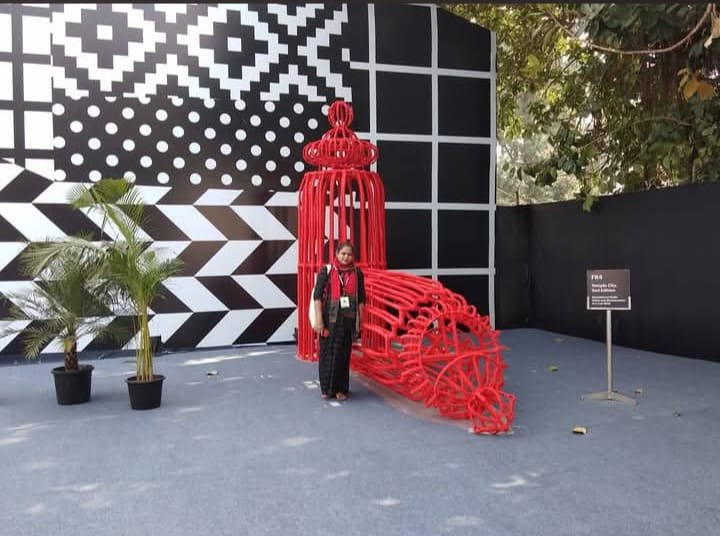
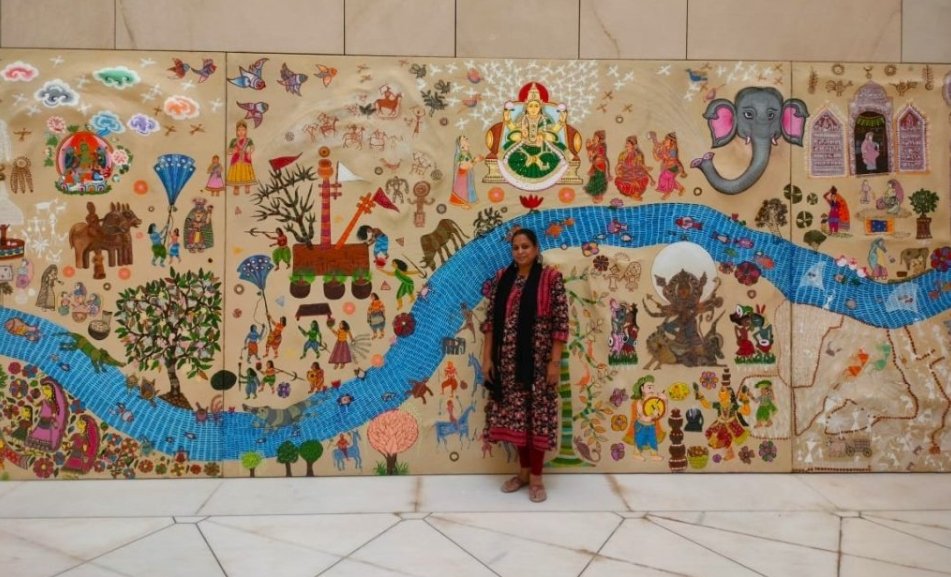
Majhi’s involvement in public murals and large-scale artistic interventions demonstrates her interest in taking art outside conventional gallery environments.
Public art requires a different relationship with the audience.
A gallery visitor may deliberately enter an exhibition to look at an artwork. A public artwork can instead be encountered unexpectedly by commuters, residents, students, workers, families, and visitors.
This changes the scale and responsibility of artistic communication.
From Artistic Exchange to Public Participation
Majhi’s practice increasingly connects artistic exchange with participation.
Her involvement in public art, community initiatives, children’s workshops, and collaborative projects reflects an understanding of art as a social activity as well as an individual creative process.
The artist becomes a participant in a larger environment.
Ideas move in multiple directions: from artist to community, from community to artist, and between different practitioners.
This makes artistic exchange a continuing process rather than a single event.
Learning From Children
Art education has also provided Majhi with a distinctive form of artistic exchange.
Through workshops with children in schools and educational communities over many years, she has encountered creative responses that are often direct, imaginative, and rooted in personal experience.
Children may respond to trees, animals, festivals, family activities, journeys, or memories without worrying about conventional artistic rules.
Such interactions can remind an experienced artist of the importance of observation and spontaneity.
For Majhi, education and artistic practice therefore intersect.
Teaching becomes another form of learning.
Cultural Exchange Without Losing Identity
One of the important questions facing contemporary artists is how to engage with wider artistic networks without losing their connection to local identity.
Majhi’s career offers an example of maintaining this balance.
Her work continues to draw from Odisha, its landscapes, communities, cultural memories, and traditional knowledge, even as she participates in broader artistic platforms.
The result is not a rejection of local identity in favour of global contemporary art.
Instead, local experience becomes a foundation from which wider conversations can develop.
Institutions and Artistic Networks
Majhi’s professional journey has included engagement with institutions and platforms such as Bharat Bhavan, Lalit Kala Akademi, Odisha Lalit Kala Akademi, gallery spaces, art trails, residencies, and artist camps.
These networks provide more than exhibition opportunities.
They create connections between artists, curators, institutions, communities, and audiences.
Majhi’s role as an artist and curator further strengthens this relationship.
Her work demonstrates an interest not only in creating artworks but also in helping artistic ideas circulate through exhibitions, public projects, workshops, and community initiatives.
The Artist as a Continuous Learner
Residencies and exchanges ultimately reinforce an important idea: an artist’s education does not end with a formal degree.
Majhi’s M.F.A. in Traditional Art provided an academic foundation, but decades of practice have added another form of education—learning through places, people, communities, materials, exhibitions, children, artists, and public spaces.
Every new environment can raise new questions.
Every collaboration can introduce another perspective.
Every community encounter can challenge assumptions.
This continuous learning contributes to the evolution of an artistic vocabulary.
Connecting Odisha With Wider Conversations
Perhaps one of the most significant aspects of Majhi’s journey is the way she connects regional experience with broader contemporary art discussions.
Her engagement with Odisha remains central, but the contexts in which she works have expanded.
From Bhubaneswar and Cuttack to rural and tribal communities, from national cultural projects to international artistic exchanges, her practice demonstrates that contemporary art can move across geographical and cultural boundaries without becoming disconnected from its roots.
Conclusion
Satyabhama Majhi’s participation in residencies, artist camps, exhibitions, workshops, and collaborative projects has contributed to an artistic journey built around exchange and observation.
These experiences have expanded her practice beyond the studio and created opportunities to encounter different landscapes, communities, artists, institutions, and audiences.
Yet the significance of these exchanges lies not simply in the number of platforms she has participated in.
Their deeper value can be seen in the way they support an evolving artistic practice—one that remains connected to Odisha while engaging with wider contemporary conversations.
For Majhi, artistic growth appears to be a continuing process of looking, listening, participating, experimenting, and learning.
Her journey demonstrates that an artist can carry the memory of one place into another, encounter new perspectives without abandoning existing cultural roots, and transform artistic exchange into a source of creative development.
In an increasingly interconnected art world, this ability to move between local experience and wider artistic dialogue is one of the defining strengths of Satyabhama Majhi’s contemporary practice.